Room Styles
An Afrohemian Sanctuary in Miniature: Mud-Cloth Patterns at Tiny Scale
Build an Afrohemian sanctuary in miniature at 1:12: warm earth colours, mud-cloth-inspired patterns at tiny scale, handmade textures and a respectful way to credit the traditions.
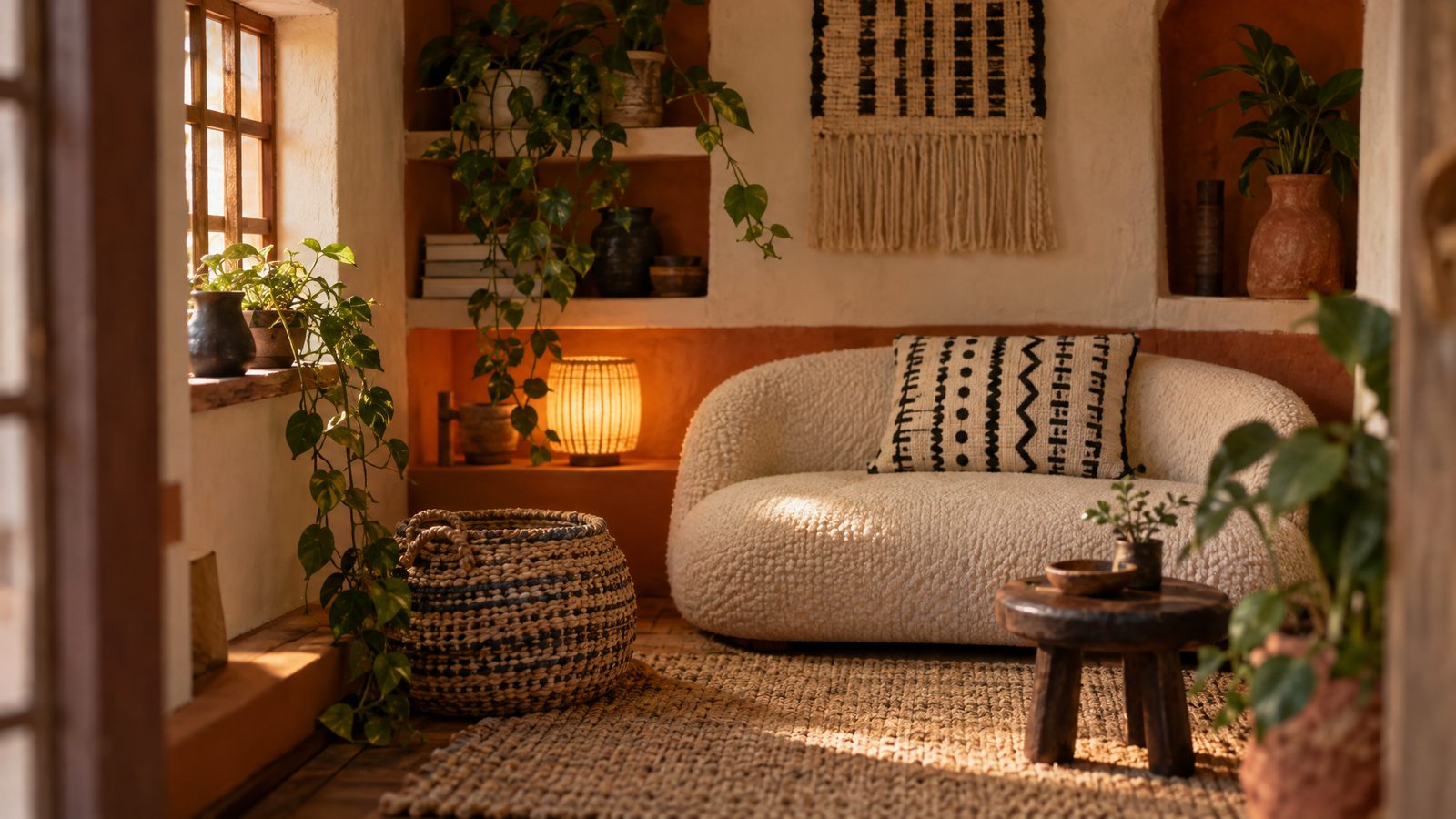
An Afrohemian room feels like a long welcome. Warm earth colours, layered textures, handmade things with stories, plants everywhere. It mixes bohemian ease with African design, and it works best when you take the time to learn where the patterns come from.
This is a sanctuary to build at 1:12, and it is one of the six rooms in the Tiny World Quiz. We will build it with care and name the traditions as we go.
Start with respect
Patterns are not decoration. Many carry meaning and history, and they belong to the people who make them. A few habits make a miniature room better and kinder.
- Name the tradition. If your pattern is inspired by Bògòlanfini, say so. Bògòlanfini is a cloth from Mali, usually called mud cloth. It is traditionally made by dyeing cotton with plants and fermented river mud, and the patterns are painted by hand.
- Draw inspiration, not copies. Make your own patterns from the same building blocks, such as dots, zigzags, crosses and ladders. Do not trace a particular cloth and sell it.
- Buy from makers. In your own home, look for real handmade pieces from makers who are paid fairly. In your miniature, you can do the same with a tiny purchased basket or a scrap of handwoven cloth.
- Never aim for "the look, cheap". The point is warmth and care, not shortcuts.
A few traditions worth knowing
You do not need to use them all. Learn one or two well.
- Bògòlanfini (Mali): hand-painted cloth dyed with plant dyes and fermented mud, often cream and dark brown or black.
- Kente (Ghana): bright, strip-woven cloth with bold geometric patterns, woven on narrow looms and sewn together.
- Adire (Yoruba people, Nigeria): indigo-dyed cloth, patterned by resisting the dye with starch or by tying and stitching.
- Kuba cloth (Democratic Republic of the Congo): textiles with geometric patterns made from raffia, often with a rich, layered rhythm.
For a first room, one tradition is plenty. We will use a mud-cloth-inspired palette because it suits a cream and terracotta room.
The palette
Warm and earthy, never loud.
- Cream walls (the colour of unbleached cotton)
- Terracotta and rust for the sofa, pots and floor
- Ochre for small touches
- Deep green for plants
- Dark brown or black for pattern lines
- Dark wood for furniture
Keep the pattern in only one or two colours. Layers of different textures do the rest.
Pattern at tiny scale
At 1:12, the lines on a real cloth shrink to a fraction of a millimetre. You will need to simplify, and that is good: bold, simple marks read better in miniature.
- A real 5 cm band of zigzags becomes about 4 mm.
- A real dot of 1 cm becomes about 0.8 mm. Use the tip of a fine pen.
- A real ladder with 5 cm gaps becomes rungs about 4 mm apart.
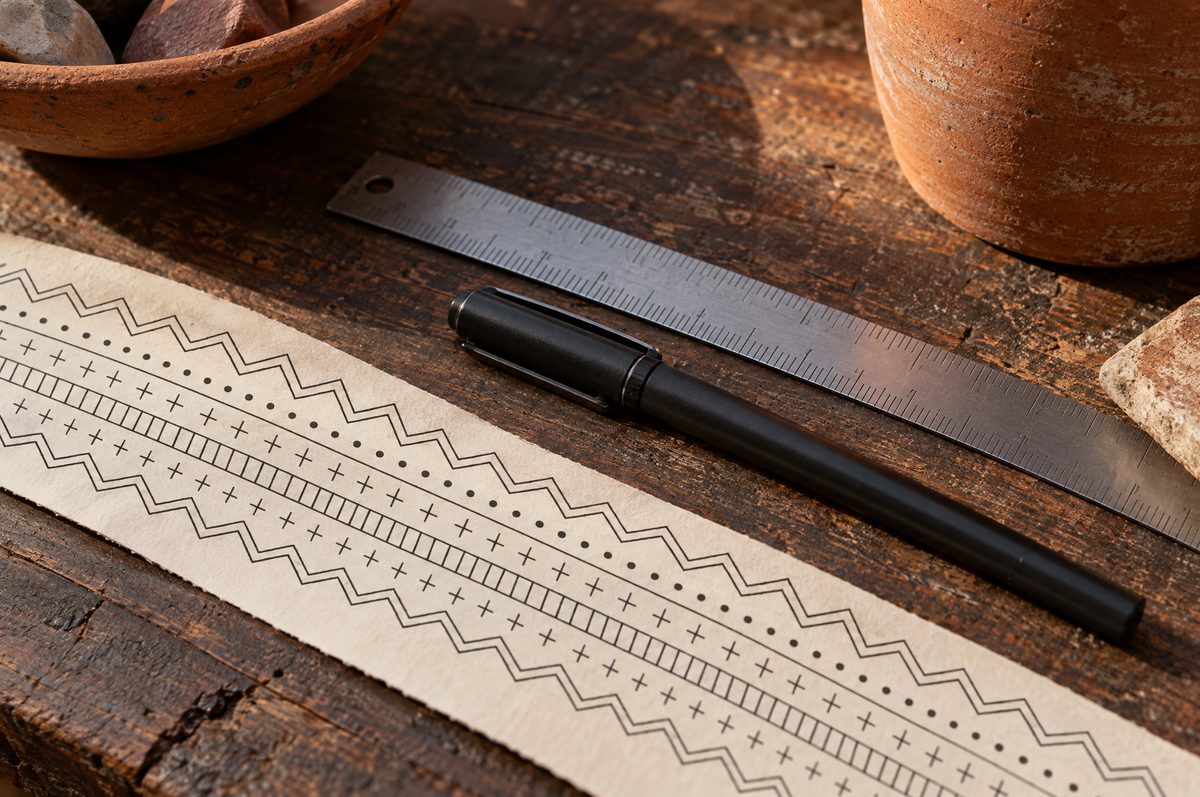
Draw a pattern strip on cream paper with a fine black pen or a thin brush and diluted ink. Use a ruler for straight lines and then break them a little by hand. The slight wobbles are what make it look made, not printed.
Easy pattern methods
- Fine pen on paper or thin cotton. The simplest, and good for cushions, rugs and wall hangings.
- Stamping. Cut a tiny shape from the end of a pencil eraser, such as a cross or a diamond, and stamp it in rows with dark paint.
- Dot work. Dip a pin in paint and dab even rows of dots.
- Resist. Draw a pattern on cotton with a dab of PVA glue, let it dry, then paint over the cotton with diluted ink. When it is dry, rub off the glue to reveal pale lines, a very simple nod to resist-dyeing.
The pieces
A low, rounded sofa
Cut a base from laminated card and cover it with cream cotton or felt. Add two cushions, one plain, one with your hand-drawn pattern.
A woven basket
Coil a thin cord or jute twine in a spiral, gluing each round to the last with PVA. Build it up at the sides, trim and tuck the end. Baskets are made in many traditions around the world, so give yours a plain, honest shape.
A little wooden stool
Make a round top from a thick card disc and glue three or four short legs to its underside. Stain or paint it dark brown. A stool is a lovely first thing to carve or whittle from a balsa offcut.
A wall hanging
Weave strips of cream, terracotta and ochre embroidery thread over a card loom or glue them side by side on a backing strip. Hang it from a twig.
Plants
Lots of them, in terracotta pots. See our plants post for paper leaves, wire stems and clay pots.
A rug
A flat, patterned rug grounds the room. Our rug post has methods for embroidered, printed and felt rugs.
Light
Warm, low and golden. Use a battery LED in warm white and soften it with tracing paper. Let it come through a small window in the back wall, or tuck it inside a tiny woven basket shade for a lamp. Never use a real flame, and keep battery boxes where you can reach them.
Safety notes
- Craft knife: cut away from your hand with a fresh blade.
- Dyes and inks: use water-based inks and paints, and keep the window open.
- Pins and needles: count them in and out, and keep them away from young children.
- Battery lights: keep button batteries away from small children.
Try this today: the pattern strip
Take a strip of cream paper 2 cm wide. Draw a row of zigzags across it with a fine black pen. Add a row of dots below, then a row of small crosses. Cut it out and glue it as a band around a card cylinder to make a tiny vase. You have made your first tiny pattern in ten minutes.
The Afrohemian Sanctuary is one of the six rooms in the Tiny World Quiz, and your email unlocks 4K wallpapers of your result: https://miniatures.artblibs.com/#quiz
A room that remembers
A sanctuary is a place you want to be. When the lamp is glowing and a tiny pattern catches the light, the room feels as if it has been loved for years. Keep learning where its parts come from, and it will keep deepening.